Before You Buy the Dalasi: A Currency Primer for American Investors Eyeing The Gambia
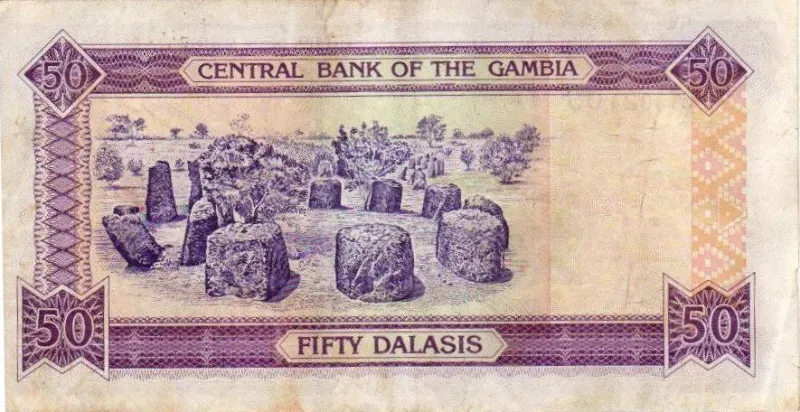
Photo: Jolle, CC BY-SA 3.0, via Wikimedia Commons
A Small Currency in a Small Economy
For most American investors, the Gambian dalasi (GMD) is unfamiliar territory. It trades thinly, it doesn't appear on retail forex platforms, and its daily movements rarely register on financial news feeds. Yet for anyone allocating capital to The Gambia — whether through real estate, agribusiness, or tourism ventures — the dalasi is not a footnote. It is a core variable in your return calculation.
The Gambia is a narrow strip of a country wrapped around a river, with a population of roughly 2.7 million and an economy heavily dependent on tourism, remittances, agriculture (groundnuts in particular), and re-export trade. Small economies like this don't issue currencies that float in deep, liquid markets. The dalasi's value is shaped by a handful of flows, and understanding those flows is the first step toward investing with open eyes.
How the Dalasi Has Moved — and Why
Over the past decade, the dalasi has experienced meaningful depreciation against the US dollar, punctuated by sharp episodes such as the 2022-2023 period, when the currency weakened considerably amid post-pandemic tourism losses, elevated import costs, and monetary tightening. The Central Bank of The Gambia has since worked to stabilize the exchange rate through higher policy rates and improved reserve management, and the dalasi has shown more composure in recent years.
Three structural forces dominate the currency's behavior:
- Tourism seasonality. European charter arrivals, concentrated from November through April, bring a surge of foreign exchange. In the off-season, dollar inflows thin out and the dalasi can soften.
- Remittances. The diaspora — including a substantial Gambian-American community in New York, Atlanta, and the Washington metro area — sends hundreds of millions of dollars home annually. These flows are a quiet but powerful stabilizer.
- Import dependence. The Gambia imports far more than it exports, from rice and fuel to vehicles. Trade deficits put persistent, structural downward pressure on the currency.
The takeaway for US investors: the dalasi tends to track the health of these three channels. When tourism rebounds and remittances flow, the currency holds. When shocks hit — a pandemic, a fuel spike, regional instability — the dalasi moves first and hardest.
Why Currency Risk Is Amplified Here
In larger emerging markets, currency risk is one input among many. In The Gambia, it can be the input. A 10% dalasi depreciation can erase an entire year's rental yield on a coastal property or compress margins on an agribusiness exporting in dollars while paying wages in dalasi.
There is a second, subtler issue: convertibility and liquidity. Even in stable periods, the market for dalasi is shallow. Large dollar conversions can move the informal rate away from the official one, and repatriating capital takes planning. US investors accustomed to instant dollar-liquidity need to recalibrate expectations around timing and execution.
Practical Hedging Strategies for US-Based Investors
Full hedging instruments for the dalasi don't exist in the way a Chicago-based treasury team might expect. There is no liquid GMD futures market. Instead, hedging happens through structure and discipline:
1. Structure contracts in hard currency where possible. Lease agreements, management contracts, and offtake agreements with international counterparties can often be denominated in USD or EUR. Anchor your revenue side to hard currency; keep dalasi exposure on the cost side, where depreciation can actually work in your favor.
2. Match currency of revenue to currency of obligations. A tourism operation earning in euros should, where practical, denominate supplier and payroll commitments in dalasi while banking the foreign exchange. This natural hedge reduces the need for speculative conversion.
3. Time your conversions. Entering during peak tourism season, when dollar liquidity is highest, typically secures better rates than converting in the off-season. Spread conversions across tranches rather than transacting in one lump sum.
4. Use the banking system, not the street. Licensed commercial banks and official exchange bureaus offer documentation that matters enormously later — for repatriation, tax reporting to the IRS, and demonstrating compliance with Gambian foreign exchange regulations. Undocumented conversions can complicate (or block) profit repatriation down the road.
5. Build a depreciation assumption into your model. Prudent underwriting for Gambia-linked projects assumes modest annual dalasi depreciation rather than a flat currency. If the dalasi holds, that's upside; if it slides, your returns survive.
The Diaspora Advantage
Gambian-Americans hold a structural edge that pure financial hedging cannot replicate. Many maintain dual income streams — dollar earnings in the US, dalasi obligations and assets in The Gambia — creating a natural currency offset. Remittance-senders effectively buy dalasi at moments of their choosing, and those who convert during high-liquidity periods consistently capture better effective rates.
For this audience, the currency question is less about hedging and more about optimization: when to convert, how to document, and how to channel funds through formal banking channels that build credit history and legal clarity for future investments.
The Bottom Line
The dalasi will never be a reserve currency, and it doesn't need to be. What it is, in skilled hands, is a manageable variable. Investors who understand its seasonal rhythms, respect its liquidity constraints, and structure their exposure deliberately can invest in The Gambia with their eyes open — and with a meaningful margin of safety built into their assumptions.
At Asset Gambia, we advise every client to treat currency analysis as a first-order discipline, not an afterthought. In a market this size, the difference between a well-structured and poorly structured exposure is often the difference between a return and a lesson.
This article is for informational purposes only and does not constitute financial or investment advice. Consult qualified advisors regarding currency, tax, and regulatory matters in both jurisdictions.