Delegation Without Drift: A 2026 Power-of-Attorney Governance Guide for Gambian-American Investors
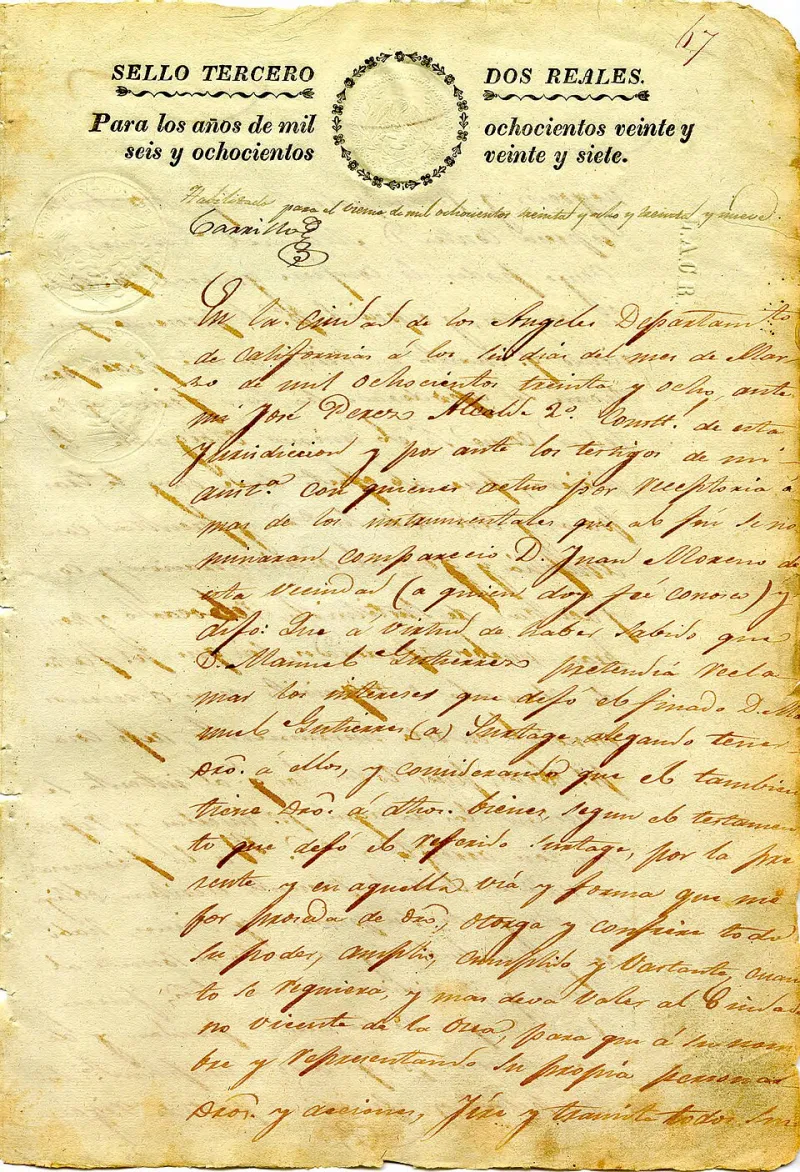
Photo: Unknown authorUnknown author, Public domain, via Wikimedia Commons
A power of attorney is often treated as a family courtesy: a form signed before a flight, a favor extended to a cousin, a way to keep a project moving while the principal is in the United States. In cross-border investing, that framing is backwards. Delegated authority is a governance instrument. It determines who can bind the investor, how far that authority reaches, and what evidence exists when decisions are questioned. For Gambian-American investors in 2026, the objective is not to avoid delegation. It is to delegate without surrendering control.
Convenience Is Not a Control System
Diaspora investing in The Gambia frequently depends on someone local: a relative who can visit the bank, a friend who can follow up with the surveyor, a business partner who can attend a meeting in Banjul. That reliance is practical. It becomes a risk when the legal document behind it is broad, vague, or borrowed from another country’s assumptions.
The problem is rarely that the agent is dishonest. More often, the document is simply too elastic. It authorizes “all matters” or “full power” because that was easier than anticipating specific transactions. It may lack an expiration date, a spending limit, or a reporting obligation. It may be signed under one legal system and presented in another. By the time a dispute or an audit arises, the investor discovers that convenience has quietly become a transfer of control.
Name the Act, Not Just the Agent
A durable, well-drafted power of attorney should identify the agent with precision and describe the acts the agent may perform. The distinction matters. Naming a trusted nephew is not the same as authorizing him to sell a titled property, open a corporate account, or receive bank statements on the investor’s behalf.
For Gambian investments, the document should specify the subject matter. If the authority concerns real estate, it should identify the property, the permitted steps, and whether the agent may negotiate, sign, or merely inquire. If it concerns a bank account, it should state the institution, the account, and whether the agent may withdraw funds or only obtain information. If it concerns a company, it should align with the company’s constitutional documents and any shareholder resolutions.
Broad phrases invite broad interpretations. Specific clauses create a record. They also make it harder for an institution to exceed the authority the investor intended to grant.
The Two-Law Review
A power of attorney executed in the United States does not automatically travel well. Gambian institutions may apply their own formalities, language requirements, notarization rules, and acceptance practices. A document that is effective for a US bank or state agency may be questioned by a Gambian land registry, corporate service provider, or financial institution.
The sensible approach is a dual-law review. US counsel should confirm that the document is valid under the investor’s home jurisdiction and consistent with the investor’s estate plan. Gambian counsel should confirm that it will be recognized for the intended transaction and that it satisfies local requirements. The review should also address practical execution details: signatures, witnesses, notarization, legalization or apostille steps where applicable, and whether a certified translation is needed.
This is not a bureaucratic box to tick. It is the difference between an agent who can act and an agent who discovers, at the counter, that the paperwork is not accepted.
Caps, Conditions, and Circuit Breakers
Authority should be bounded by amount, purpose, and time. A power of attorney that permits an agent to spend an unlimited sum is not a governance document; it is an open mandate. Investors can instead set transaction ceilings, require prior written approval above a threshold, or limit the agent to a single defined project.
Conditions matter as much as caps. The document can prohibit self-dealing, require the agent to act only with independent professional advice, or bar transactions with relatives and affiliated companies unless separately approved. It can expire on a fixed date or on completion of the stated purpose. It can also be revoked in writing, with notice sent to the institutions that relied on it.
These provisions do not imply distrust. They clarify the boundaries in advance, which is fairer to the agent and safer for the principal.
Reporting That Travels
Delegated authority without reporting is a blind spot. The investor should require the agent to provide written updates at defined intervals: bank statements, transaction summaries, receipts, correspondence with professionals, and a simple log of decisions made. Where the sums are material, an independent local accountant or lawyer can review the records rather than relying solely on the agent’s account.
Reporting should be designed for distance. A monthly email with scanned documents and a short narrative is more useful than a phone call that leaves no record. The investor should also retain direct access to statements where possible and confirm that institutions will send copies to the principal as well as the agent.
Safeguards Before Money Moves
Sequence matters. Before funds are wired or authority is exercised, the investor should confirm that the document is executed correctly, that the agent understands the limits, and that the relevant institution has accepted the paperwork in principle. A pre-clearance call with the bank or registry can reveal problems while they are still fixable.
It is also prudent to keep the original document in secure custody, provide certified copies rather than originals where acceptable, and maintain a written revocation protocol. If an agent’s role ends, the investor should notify every institution that received the document. Silence is not revocation.
At Asset Gambia, the working assumption is that family trust and formal governance can coexist. They must. A power of attorney is not a substitute for judgment, and it is not a transfer of ownership. It is a limited tool for a limited purpose. Drafted with specificity, reviewed under both legal systems, and monitored through reporting, it can keep a Gambian investment moving without allowing control to drift away from the investor.
This article is general information, not legal advice. Investors should consult qualified US and Gambian counsel before executing or relying on any power of attorney.