Cold Chains Before Beach Chairs: Screening The Gambia's Blue Economy in 2026
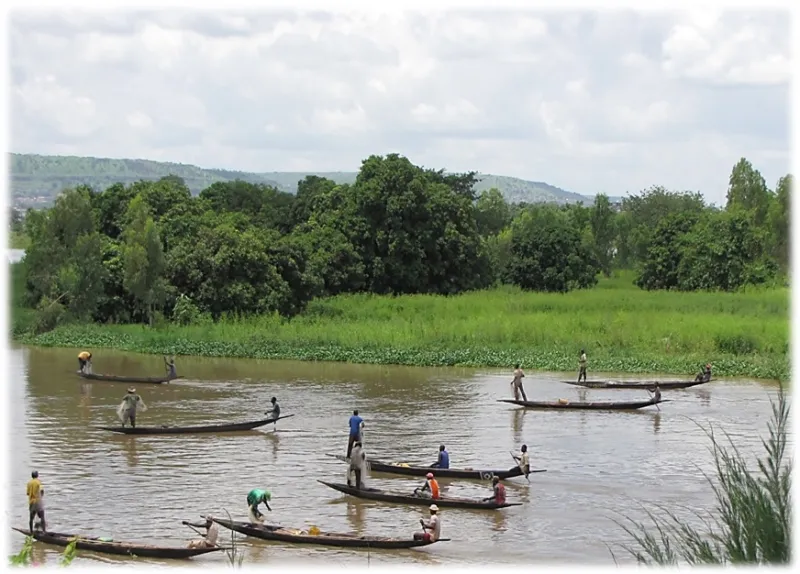
Photo: T.K. Naliaka, CC BY-SA 4.0, via Wikimedia Commons
The Gambia's coastline is easy to sell. A beach house, a boutique hotel, a restaurant with an ocean view—these are familiar entry points for diaspora capital and stateside investors alike. But the country's blue economy is a different proposition. It is less about scenery and more about fish landings, ice, refrigeration, port access, fuel, maintenance, food-safety compliance, and contracts that hold up when the power fails or the boat arrives late.
That distinction matters in 2026. Development institutions and regional bodies continue to promote West African fisheries, aquaculture, and marine services as growth sectors. Some of that attention is commercially useful. Some of it is donor-funded theater. A US investor considering The Gambia should be able to tell the difference before wiring funds.
Why the Blue Economy Deserves a Closer Look
The Gambia has a long fishing tradition, a compact geography, and access to Atlantic markets. Its port and river system create logistical possibilities that larger neighbors do not always have in the same compact form. Artisanal fisheries support local livelihoods, while industrial and semi-industrial fishing supply processing and export channels. Aquaculture remains small but has attracted policy interest. Marine services—repair, provisioning, safety equipment, waste reception, and small-vessel support—are often overlooked because they are unglamorous.
For investors, the appeal is not simply that the ocean is nearby. It is that the value chain has visible bottlenecks. Fish needs to be chilled quickly. Processing requires reliable water and power. Exporters need testing, packaging, and documentation. Vessels need parts and maintenance. These are operational problems, and operational problems can be investable when the demand is real and the counterparties are competent.
Separate Commercial Potential From Development Hype
Blue-economy pitching often blurs three different things: development need, policy ambition, and bankable demand. A project can be important for food security and still be a poor private investment. A pilot can receive grant funding and still have no paying customers. A memorandum of understanding can be signed without any obligation to purchase.
US investors should apply a simple discipline. Ask whether the revenue comes from commercial buyers or from a donor cycle. Ask who pays for the cold chain, the compliance testing, and the working capital. Ask whether the business depends on a single off-taker, a single landing site, or a single political relationship. If the answer is yes, the investment is likely closer to a development grant than an equity opportunity.
The More Investable Layers
Fisheries value chains are not one business. They are a series of linked businesses: landing and handling, ice production, primary processing, packaging, cold storage, transport, export documentation, and byproduct use. The most attractive entry points are often the ones that serve many operators rather than betting on one boat or one species. A well-run cold-storage and ice operation, for example, can serve artisanal fishers, processors, retailers, and hospitality buyers.
Aquaculture is more complicated. Feed, fingerlings, biosecurity, water quality, and technical management all matter. Investors should be skeptical of projections that assume high survival rates and stable feed costs without local evidence. A small commercial farm with disciplined operations can be a better teacher than a large feasibility study.
Cold-chain logistics deserves particular attention. In a tropical coastal market, temperature control is not a luxury—it is the product. Solar-hybrid refrigeration, insulated transport, and reliable ice supply can reduce spoilage and improve bargaining power for producers. But cold chain is capital-intensive and maintenance-heavy. The screening question is not whether The Gambia needs it. It is whether a specific operator can keep the equipment running and collect receivables.
Marine services are another practical angle. Small vessels need repair, safety gear, painting, provisioning, and waste handling. These businesses are less dependent on export licenses and can generate recurring revenue. They also require technical partners and spare-parts networks, which is where many hopeful entrants underestimate the difficulty.
Regulatory and Partnership Questions
Before underwriting any blue-economy project, US investors should map the regulatory chain. Fishing access, quotas, landing requirements, and export permits may involve several agencies. Food-safety and sanitary requirements apply to processing and export. Environmental and coastal permits may be needed for construction or water use. Foreign ownership, land tenure, and port access can each shape the structure of a deal.
The partnership questions are just as important. Who holds the license? Who controls the landing site? Who has the offtake relationship? Who maintains the cold room? Who bears the risk of currency movement and delayed payments? A local partner with operational experience can be essential, but investors should verify that experience rather than accepting a biography.
A Practical Screening Framework
A useful framework has seven filters. First, demand: identify paying customers, not just beneficiaries. Second, asset intensity: understand the true cost of power, water, maintenance, and replacement parts. Third, licensing: confirm which permits are held, by whom, and for how long. Fourth, logistics: test the route from landing to storage to port or buyer. Fifth, counterparty quality: review contracts, payment history, and governance. Sixth, currency and repatriation: model dalasi costs against dollar returns and confirm how profits can be moved. Seventh, exit: ask who would buy the business in five years and why.
For diaspora investors, this framework is especially useful because it counters the tendency to invest through trust alone. Trust is necessary but not sufficient. A US-based investor would not fund a cold-storage company in another state without site visits, customer calls, and a review of maintenance records. The same standard should apply in The Gambia.
The Bottom Line
The Gambia's blue economy is not a passive beachfront play. It is an operating business sector built on logistics, compliance, and working capital. That makes it less romantic and more demanding than hospitality, but it also makes it a place where disciplined investors can find less crowded opportunities. The right starting point in 2026 is not a brochure about the ocean's potential. It is a cold-eyed review of the cold chain.