From Remittances to Real Assets: A Smarter Path for Gambian-Americans Building Wealth Back Home

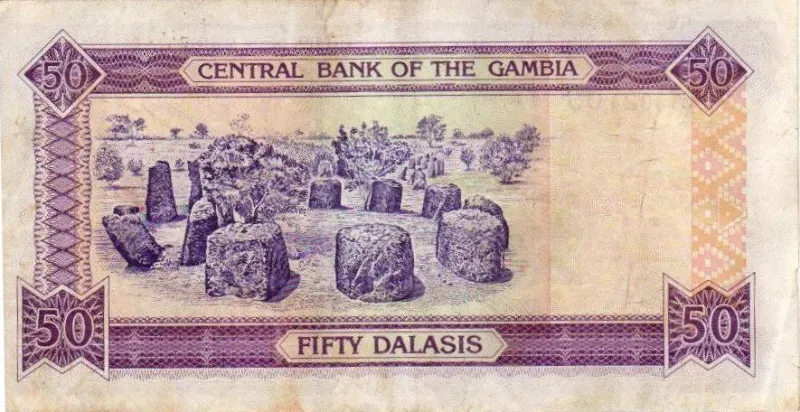
Photo: Petar Milošević, CC BY-SA 4.0, via Wikimedia Commons
For decades, the financial relationship between Gambian-Americans and their homeland has run in one direction: money sent home to cover school fees, medical bills, and daily living expenses. That flow remains vital. But a growing number of US-based Gambians are asking a different question—not how much should I send this month, but what could I own ten years from now?
The shift from remitting to investing is more than a change in mindset. It changes the risks you must manage, chief among them the movement of the dalasi against the US dollar.
Why the Remittance Model Leaves Value on the Table
The Gambia receives well over $100 million in formal remittances annually, with a meaningful share originating from the United States—particularly from established communities in New York, Atlanta, and the Washington, DC metro area. That money is transformative for households, but as pure cash transfers, it generates no equity, no rental income, and no appreciating stake.
Consider a simple comparison. A family in the Bronx sending $500 a month to Banjul transfers roughly $6,000 a year that is consumed immediately. The same $6,000, deployed gradually into a rental unit in Serrekunda or a minority stake in an agribusiness venture, becomes a claim on future income. Neither choice is wrong—but the second one builds a balance sheet.
The Currency Question American Investors Can't Ignore
Here is where many first-time diaspora investors stumble. The dalasi has historically been a managed, gradually depreciating currency against the US dollar. Over long holding periods, that depreciation is neither dramatic nor chaotic—but it is real, and it affects how you should structure any investment.
Three practical implications follow:
1. Time your conversions deliberately. Sending lump sums at random intervals means accepting whatever exchange rate prevails that week. Investors building a property purchase over 12–18 months can dollar-cost-average their conversions, spreading dalasi purchases across multiple transfers to smooth out rate volatility.
2. Match currency to purpose. If your eventual income from a Gambian asset will be in dalasi, understand that when converted back to dollars, your effective return shrinks if the dalasi weakens. Some structured investments and diaspora-focused instruments price returns partially in foreign currency terms precisely to address this concern.
3. Use regulated channels—always. Informal transfer methods may seem cheaper, but they expose you to fraud, offer no documentation for US tax reporting, and provide no paper trail if a dispute arises over a property purchase. Licensed money transfer operators and bank-to-bank wires cost slightly more and protect considerably more.
Where Diaspora Capital Is Actually Going
The most common entry point remains residential real estate—partly because diaspora buyers understand housing, and partly because the rental market in the Greater Banjul Area is tightening as tourism and regional commerce expand. A well-located two- or three-bedroom unit can serve dual duty: a future retirement home and an income-producing rental in the interim.
Beyond property, we're seeing increased interest in:
- Small and mid-sized business stakes, particularly in logistics, hospitality, and food processing, where diaspora investors bring both capital and US market knowledge
- Agricultural ventures, including cashew and horticulture operations with export potential to American markets
- Structured diaspora investment funds, which pool capital under professional management and handle due diligence that individual investors often can't perform from 4,000 miles away
Each asset class carries different currency exposure, and each deserves the same scrutiny you'd apply to any investment stateside.
Doing It Securely from Abroad
Distance is the diaspora investor's greatest vulnerability. The classic failure mode is well-intentioned money routed through a relative, with no title verification, no written agreement, and no independent oversight. When things go wrong, there is nothing to fall back on.
Protect yourself with the same discipline you'd expect from a US transaction:
- Verify title independently through a Gambian attorney—not the seller's attorney—before funds move
- Document everything in writing, including any family arrangement to manage property on your behalf
- Understand the land tenure system, since leasehold and freehold rights in The Gambia differ in ways that surprise American buyers
- Keep full transfer records for both Gambian authorities and your US tax filings, including FBAR and FATCA obligations if you hold accounts locally
The Bigger Picture
The Gambian diaspora represents one of the most underleveraged sources of development capital in West Africa. Unlike foreign institutional money, diaspora investors bring patience, cultural fluency, and a genuine stake in outcomes. Converting monthly remittances into structured, documented, currency-aware investments doesn't just build personal wealth—it deepens the economic bridge between the Gambian-American community and the country they call home.
Start small. Start documented. And start with a clear-eyed view of the dalasi, because in cross-border investing, the exchange rate is not a footnote—it's part of the investment itself.