Two Countries, One Gap: Insuring Gambian Property From the United States
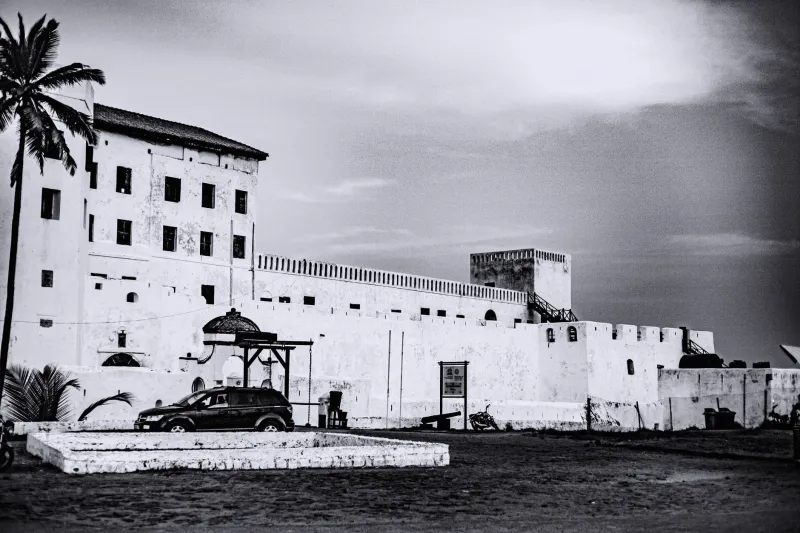
Photo: Whipple, Alphonse, Public domain, via Wikimedia Commons
Most diaspora investors spend considerable time on the purchase price, the title search, and the financing structure of a Gambian property. Insurance frequently receives less attention, sometimes arriving as a single document at closing and then sitting untouched for years. That order of priorities is understandable, but it leaves the largest unresolved question in cross-border ownership: what happens when the roof fails, a tenant is injured, or a renovation stalls?
The answer is rarely found in one policy. It sits in the space between two insurance systems, and that space is where US-based owners of Gambian assets are most exposed.
The Border Is Also a Coverage Boundary
A common assumption among American property owners is that a US homeowners or umbrella policy follows them abroad. In most cases, it does not. Standard US homeowners forms typically exclude real property located outside the United States and Canada, and personal umbrella policies often contain territorial or jurisdiction limits that are narrower than owners expect. A US policy may respond to certain personal liability claims, but it is not a substitute for local property coverage on a house in Kombo or a rental unit in Serrekunda.
The practical consequence is that a Gambian property needs a standalone local policy. The more difficult issue is that a local policy is not a mirror image of US coverage. Policy wording, exclusions, claims practice, and valuation conventions can differ materially. Owners who assume equivalence discover the gap only after a loss, when bargaining power is at its lowest.
Read the Local Policy as a Risk Map
The first task is not to compare premiums but to compare exclusions. In The Gambia, as in many markets, property policies may contain conditions that are unfamiliar to a US buyer. Common areas to examine include flood and windstorm treatment, riot and civil commotion, subsidence, wear and tear, faulty workmanship, theft requiring forcible entry, and damage caused by tenants. Occupancy conditions matter as well: a property left vacant beyond a stated period may see coverage restricted or suspended unless the insurer is notified.
Valuation deserves equal scrutiny. A sum insured stated in dalasi may look adequate until replacement requires imported materials, specialized labor, or hard-currency procurement. Underinsurance is a recurring problem in cross-border property ownership, and coinsurance clauses can reduce a claims payment proportionately when the sum insured falls below the required level. Owners should ask whether the sum insured reflects rebuild cost rather than market value, and whether the policy permits periodic indexation.
Claims currency is another practical point. A local policy may pay in local currency, which means the dollar cost of repairs can diverge from the dollar value of the claim. That is not a reason to avoid local coverage, but it is a reason to treat currency exposure as part of the insurance review rather than a separate afterthought.
Liability Where It Actually Arises
Property damage is only one part of the exposure. Liability can arise from a tenant injured on a stairway, a visitor harmed during a renovation, or a domestic worker injured on the premises. Owners should confirm whether the local policy includes public liability, employer's liability or workers' compensation where applicable, and third-party liability during construction. If a renovation is planned, a construction all-risk policy and a separate third-party liability extension are usually more appropriate than relying on a standard property form.
US-based owners should also ask their US broker a direct question: does the personal umbrella policy respond to a claim brought in The Gambia, and does it defend a lawsuit filed there? The answer is often more limited than the policyholder assumes. A foreign liability extension may be available, but it should be confirmed in writing rather than inferred from a general liability section.
Documentation Before the Loss
Claims are won or lost on evidence. Before a loss occurs, owners should assemble a property file that includes photographs and video of the property, an inventory of major fixtures and contents, purchase receipts, title documents, a recent valuation or survey, lease agreements, maintenance records, and contractor certificates for past works. Where a property is managed by a local agent, the owner should confirm who holds the originals and who can produce them quickly.
After a loss, the practical steps are familiar but time-sensitive: notify the insurer promptly, preserve the damaged area where safe to do so, obtain a police report where required, document everything with photographs and receipts, and keep a written log of communications. If documents are in a local language or format, translations may be needed. An independent loss adjuster can help, but the owner should understand who appoints the adjuster and who pays for the assessment.
Coordinate the Two Sides
The most effective risk-transfer structure is not a single policy but a coordinated schedule. Owners should maintain one master document listing each property, the local policy number, the insurer, the sum insured, the deductible, the liability limits, the key exclusions, the claims contact, and the US broker's view of any overlapping coverage. That schedule should be reviewed annually, ideally before renewal, and updated after any renovation, change in tenant, or change in use.
A simple claims protocol is equally useful. It should identify who calls the insurer, who speaks to the loss adjuster, who holds the document file, and who authorizes emergency repairs. In a cross-border loss, delay is expensive, and ambiguity about authority is a common source of avoidable loss.
A Practical Checklist for 2026
- Confirm in writing that the US homeowners or umbrella policy does not cover the Gambian property structure.
- Obtain a standalone local policy and review the exclusions, not just the premium.
- Set the sum insured at replacement cost, with attention to imported materials and labor.
- Confirm occupancy conditions and notify the insurer of extended vacancy.
- Check public liability, employer's liability, and construction all-risk coverage where relevant.
- Ask the US broker whether any foreign liability extension applies and request written confirmation.
- Maintain a property evidence file and a named local representative for claims.
- Review the master insurance schedule annually and after any material change.
Insurance does not eliminate risk. It transfers defined risk for a price. In cross-border ownership, the greater danger is the undefined gap between two policies that each look adequate on their own. Treating insurance as an operating system rather than a closing cost is the more reliable way to protect Gambian assets owned from the United States.