When a Will Stops at the Border: A 2026 Estate-Planning Framework for Gambian-American Families
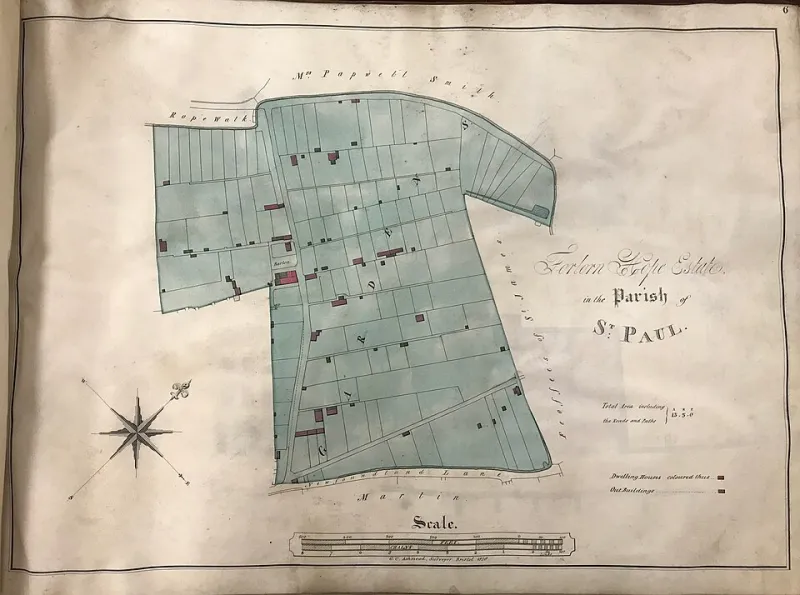
Photo: George C. Ashmead, Public domain, via Wikimedia Commons
Many Gambian-American families have built two financial lives: one in the United States, anchored by a home, retirement accounts, and a carefully drafted will or revocable trust, and another in The Gambia, where land, bank balances, or a family business may represent years of saving and sacrifice. The problem is that the legal paperwork often stops at the US border. A plan that works smoothly in Maryland or Minnesota can leave heirs facing uncertainty in Kombo or Banjul.
Estate planning across two jurisdictions is not simply a matter of mailing a US will to a Gambian lawyer. It requires an inventory of what is owned, where it is located, how title is held, and which legal system will govern the transfer. For Gambian-Americans, the stakes are practical: delayed probate, disputed land claims, frozen accounts, and family friction are all avoidable with better coordination.
Why a US-Only Plan Leaves a Gap
A revocable living trust, a pour-over will, and updated beneficiary designations are strong foundations for US assets. They do not, by themselves, transfer Gambian real property. US probate avoidance does not automatically avoid Gambian probate. A US financial institution’s payable-on-death designation does not control a Gambian bank account. And a US will that names an executor may need to be presented in The Gambia through a separate process, often with local legal assistance.
The first risk is therefore structural: families assume one document governs everything. It rarely does. The second risk is factual: heirs may not know the exact location, survey plan, title document, or customary family arrangement behind a parcel of land. When the original owner dies without a clear record, those gaps become disputes.
Gambian Land Title: What Heirs Need to Know
Land in The Gambia can be held under different arrangements, including customary tenure, leasehold interests, and freehold interests, and registration status varies. Some families hold land through formal title documents; others rely on family allocation, receipts, survey plans, or long-standing customary arrangements. Those distinctions matter enormously in an inheritance.
A US estate plan should not assume that Gambian land behaves like a US deed. Heirs should be able to answer four questions: Who is the registered owner or recognized holder? What supporting documents exist? Is the land subject to a family or customary interest? And has anyone already made an informal promise about the property that could be challenged later?
Where title is unregistered or incomplete, the estate plan should include a title-remediation step before death, not after. A survey plan, a written family agreement, or a properly recorded transfer may be far more valuable to heirs than a will clause that describes an asset the family cannot prove ownership of.
Probate in The Gambia: Court, Custom, and Timing
Gambian probate is handled through the courts, with local procedures and documentation requirements. Where there is a valid will, the process generally proceeds on the basis of that will; where there is no will, intestacy rules and applicable personal law may determine who inherits. Customary and religious law can also influence outcomes, particularly in family land matters and among Muslim families. The interaction between statute, custom, and personal law is one reason a US template cannot be transplanted wholesale.
Timing is another issue. Gambian court processes, document authentication, translations, and local legal representation can add months. Heirs in the United States may need to appoint a local representative or authorize counsel. If the estate includes a business, delays can affect operations, employees, and bank accounts. Families should plan for liquidity and decision-making authority during the probate period, not just ultimate ownership.
Coordinating Beneficiaries Across Two Systems
Beneficiary designations are powerful in the United States but can create cross-border conflicts if they are not reviewed together with the will and trust. A US retirement account that passes to one child, a Gambian bank account held jointly with another, and a will that divides land equally among all children can produce three different outcomes. The result may be legal but not intentional.
Families should build a single beneficiary matrix: asset, location, titling, current beneficiary, intended beneficiary, and governing document. That matrix should be reviewed by both US and Gambian counsel. Where possible, the US plan and the Gambian plan should name the same decision-makers or clearly explain why they differ. Ambiguity is expensive across borders.
When a Trust Helps—and When It Does Not
A US revocable trust can be useful for US assets, privacy, incapacity planning, and probate avoidance. It generally does not, however, automatically control Gambian real property. A Gambian trust or trust-like arrangement may be possible, but it should be evaluated carefully; trustees, local law, tax treatment, and practical enforcement all need review.
For some families, a simple structure works best: a US will or trust for US assets, a coordinated Gambian will for Gambian assets, clear beneficiary designations, and a letter of instruction that tells heirs who to contact. For families with significant business interests, minor children, or disputed family land, a more sophisticated arrangement may be justified—but only after both legal systems are understood.
The Case for Dual-Jurisdiction Counsel
A US estate attorney who has never handled Gambian property may produce a technically valid US plan that fails in practice. A Gambian lawyer who does not see the US plan may create inconsistent instructions. The solution is not necessarily a single global law firm; it is a coordinated team. US counsel should draft and review the US documents, Gambian counsel should advise on Gambian title, probate, and succession, and the two should communicate before signatures.
This is especially important for US citizens and green-card holders with worldwide estate-tax exposure, and for families with beneficiaries in multiple countries. Tax treaties, reporting obligations, and local succession rules should be confirmed with qualified advisers. Asset Gambia’s role is to encourage that coordination, not to replace it.
A Practical 2026 Checklist
- Inventory every Gambian asset: land, bank accounts, business shares, vehicles, and receivables.
- Collect title documents, survey plans, receipts, and family agreements in one secure file.
- Confirm how each asset is titled and who currently has authority to deal with it.
- Review US wills, trusts, and beneficiary designations against the Gambian asset list.
- Ask Gambian counsel whether a separate Gambian will is advisable.
- Identify a local representative or counsel who can act if heirs are in the United States.
- Coordinate with US counsel on worldwide estate-tax and reporting questions.
- Revisit the plan after marriages, births, deaths, property purchases, or business changes.
Start With an Inventory, Not a Template
The most useful estate-planning step for a Gambian-American family in 2026 is not choosing a trust product. It is creating a clear, documented inventory of both estates and then asking qualified counsel in each jurisdiction to review it together. A will that stops at the border is not a failure of drafting; it is a failure of coordination. Families who close that gap now give their heirs something more valuable than a document: a path they can actually follow.
This article is general information, not legal or tax advice. Gambian and US succession rules are fact-specific; consult qualified counsel in both jurisdictions before acting.